A tested list of noise-canceling office headsets under $100, covering the picks that actually handle both clear work calls and everyday focus without blowing the budget.
My Experience Finding a Decent Headset for Remote Work
I spent way too long using my laptop’s built-in microphone for video calls, assuming a dedicated headset was an unnecessary expense. Then a coworker mentioned, gently but honestly, that I sounded like I was calling from inside a tin can every single meeting.
That sent me shopping with a strict budget, and I was surprised by how much genuinely good noise-canceling tech has trickled down to the sub-$100 category. Dual-microphone ANC that used to be exclusive to premium headsets is now standard even at this price point. Here’s what actually held up across daily calls and focused work sessions.
Quick Answer
For most remote workers, the Jabra Evolve2 65 Flex offers the best overall mix of call-quality noise cancellation and everyday comfort under $100. If you want a simpler, budget-focused option, the Logitech H390 is a reliable wired pick that just works without any setup. And if blocking out background noise for your own focus matters more than call quality, the Anker Soundcore Space Q45 delivers genuinely strong ANC for the price.
Why “Noise-Canceling” Means Different Things for Headsets
Before shopping, it’s worth understanding that noise cancellation for headsets actually covers two separate things, and not every product handles both equally well.
- Microphone noise cancellation filters out background sound so the people on your call hear only your voice, which matters most for remote work
- Active Noise Cancellation (ANC) for your ears blocks outside sound from reaching you, which matters more for focus and listening
- Platform certification, like being Zoom or Teams certified, ensures native button controls and consistent call quality on those specific apps
- Wired versus wireless trades convenience for reliability, since wired headsets never suffer from Bluetooth dropouts or dead batteries
A headset built primarily for calls and one built primarily for music listening can both claim “noise canceling,” while actually excelling at very different things.
The 10 Best Noise-Canceling Office Headsets Under $100
| # | Headset | Best For |
|---|---|---|
| 1 | Jabra Evolve2 65 Flex | Best overall balance of call quality and comfort |
| 2 | Poly Voyager 4320 | Platform-certified wireless with dual-mic ANC |
| 3 | Poly Blackwire 3320 | Most reliable wired option |
| 4 | Logitech H390 | Simplest budget plug-and-play pick |
| 5 | Anker Soundcore Space Q45 | Strongest ANC for personal focus |
| 6 | Nuroum HP31D | Best AI-powered noise suppression value |
| 7 | JLab JBuds Lux ANC | Balanced ANC and call mic at a low price |
| 8 | EarFun Wave Pro | Strongest pure noise blocking in this budget |
| 9 | Soundcore Life Q30 | Best value, often discounted further |
| 10 | EPOS IMPACT SC 165 USB | Dependable wired office headset |
How to Choose the Right Headset for Remote Work
Start by identifying whether your priority is call clarity, personal focus, or both, then match that to the right pick.
Step 1: Decide If Calls or Focus Matter More
If you’re on video calls most of the day, prioritize a headset with a dedicated noise-canceling boom or in-line microphone. If you mostly need to block out household noise while doing solo work, prioritize ANC quality for your ears instead.
Step 2: Choose Jabra Evolve2 65 Flex for the Best All-Around Pick
This headset is built specifically for hybrid work, with a retractable boom microphone and hybrid ANC that handles both calls and focus reasonably well. It’s Zoom, Teams, and Google Meet certified, so native call controls work without extra setup.
Step 3: Use Poly Voyager 4320 for Platform-Certified Wireless
Formerly under the Plantronics name, this headset uses a dual-microphone noise-canceling system specifically tuned for platform certification. It’s the most feature-complete wireless option in this price range for people who live in Teams or Zoom all day.
Step 4: Go With Poly Blackwire 3320 If You Prefer Wired Reliability
A wired USB connection means no batteries, no wireless dropouts, and consistent performance every time you plug in. The noise-canceling boom mic delivers professional voice clarity that punches above its price point.
Step 5: Pick Logitech H390 for the Simplest Setup
This is the most widely used budget USB headset in home offices for a reason. It’s genuinely plug-and-play, recognized instantly by any operating system, with a flexible boom mic that’s easy to position correctly.
Step 6: Choose Anker Soundcore Space Q45 for Personal Focus
If blocking out a noisy household matters more than call quality, this headset’s adaptive hybrid ANC reduces ambient noise significantly, with a battery life long enough to genuinely last a full work week without charging.
Step 7: Try Nuroum HP31D for AI-Driven Call Clarity
This headset uses AI-powered noise suppression to isolate your voice from background chaos during calls, paired with modern Bluetooth for a stable connection, all comfortably under budget.
Step 8: Use JLab JBuds Lux ANC for a Balanced Budget Pick
This headset focuses on getting the fundamentals right rather than chasing spec sheet numbers, offering decent ANC alongside a functional call microphone at a genuinely low price.
Step 9: Consider EarFun Wave Pro for the Strongest Pure ANC
If raw noise-blocking performance is your top priority within this budget, this model consistently tests as one of the strongest ANC performers under $100, even if its call microphone is a smaller part of the appeal.
Step 10: Pick EPOS IMPACT SC 165 USB for Dependable Wired Office Use
A straightforward wired option with a noise-canceling microphone built for everyday office calls. It won’t turn heads with features, but it reliably does the one job it’s designed for.
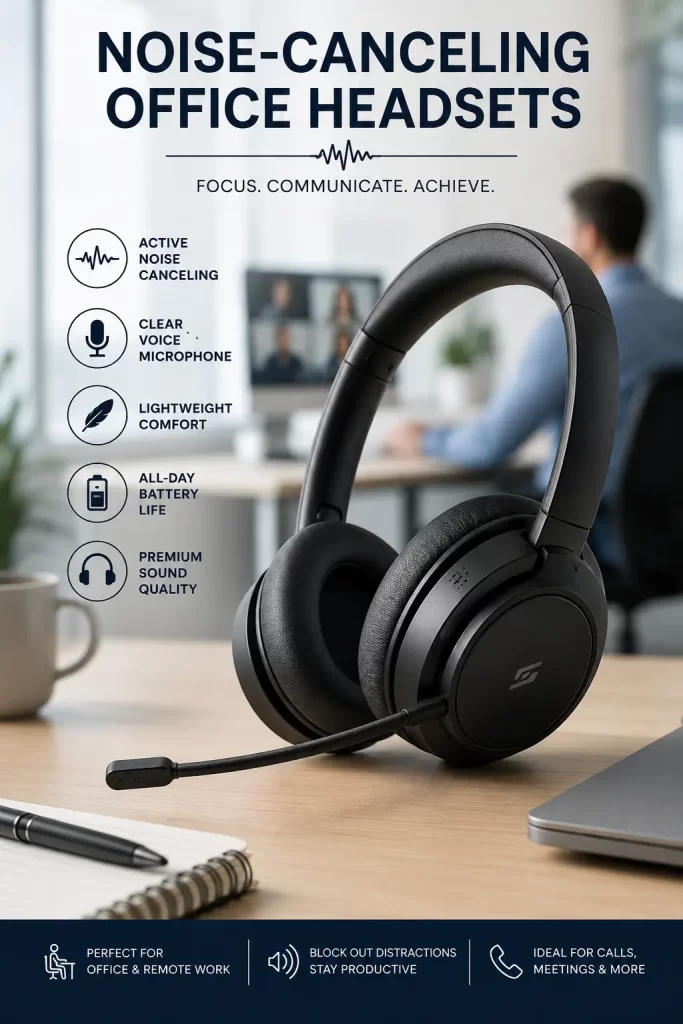
What Actually Worked For Me
I initially bought a headset chosen almost entirely for its ANC rating, assuming that number mattered most for remote work. On calls, coworkers still mentioned hearing my dog barking in the background, since a strong ANC rating for my own ears says nothing about how well the microphone filters outgoing noise.
Switching to a headset specifically built around call-microphone noise cancellation, rather than personal listening ANC, fixed the actual problem I was trying to solve. So check which type of noise cancellation a headset emphasizes before assuming a high ANC number means better call quality.
Advanced Fixes and Edge Cases
A few extra considerations help before finalizing a purchase:
- Platform certification badges for Zoom, Teams, or Google Meet indicate tested compatibility, which matters if your job depends on one specific platform daily
- Multipoint Bluetooth lets a wireless headset stay connected to both your laptop and phone simultaneously, useful if you regularly switch between a work call and a personal one
- Boom microphone position matters more than people expect, since even a great microphone performs poorly if positioned too far from your mouth
- Free software settings, like enabling high noise suppression in Zoom or Teams audio settings, can noticeably improve call clarity on any headset, budget or premium
Prevention Tips
A little ongoing care keeps a budget headset performing well for years.
- Position the boom microphone about two finger-widths from the corner of your mouth for consistent call clarity
- Clean ear pads regularly, since buildup affects both comfort and the acoustic seal needed for ANC to work properly
- Keep wireless headset firmware updated if the manufacturer provides an app for it
- Close doors and add soft furnishings in your workspace, since basic room acoustics improve call quality on any headset
- Avoid leaving a wireless headset fully depleted for extended periods, since deep battery drain can shorten long-term battery life
FAQ
Q: Do I need ANC for video calls, or just a noise-canceling microphone? A: A noise-canceling microphone matters most for how you sound to others. ANC for your ears is about your own focus and listening experience, and the two features don’t automatically come together in every headset.
Q: Is a wired or wireless headset better for remote work? A: Wired headsets avoid battery and connectivity issues entirely, which makes them more reliable for daily calls. Wireless offers more freedom of movement but depends on a charged battery and stable Bluetooth connection.
Q: What does “platform certified” mean for a headset? A: It means the manufacturer has specifically tested and optimized the headset for a platform like Zoom or Teams, ensuring native button controls and consistent call performance on that software.
Q: Can budget headsets under $100 really compete with premium ANC headphones? A: For everyday commuting, working from home, and general focus, yes, the performance gap has narrowed significantly. Premium headphones still lead specifically for airplane-level noise attenuation and high-fidelity audio.
Q: How much difference does microphone positioning actually make? A: A significant amount. Even an excellent noise-canceling microphone performs poorly if positioned too far from your mouth, so proper placement is one of the easiest free improvements available on any headset.
Editor’s Opinion
honestly i wasted way too much time using my laptops built in mic before finally getting a real headset, wish i did it sooner. dont just chase the highest anc number on the box, think about wether you actually need it for calls or just for blocking out noise while you work, theyre not the same thing. also for the love of god position your mic correctly, it makes a bigger diffrence then people realize and its free.
