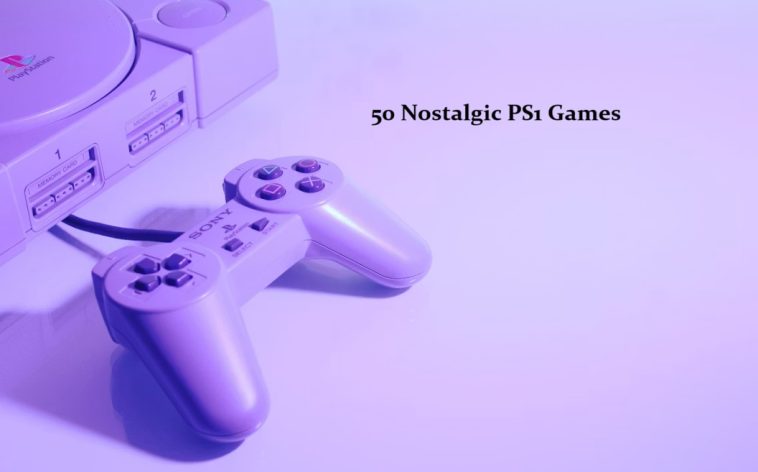
Nostalgic PS1 games have a way of hitting differently from everything that came before or after them. There’s something about that era — the grey console humming on a TV stand, the disc tray sliding open, the startup chime that felt like permission to disappear for hours — that no amount of 4K resolution or ray tracing has managed to replicate.
I got my PlayStation 1 on a Christmas morning in 1997. I remember pulling off the wrapping paper and staring at the box for a full ten seconds before my brain caught up with what I was seeing. It came with a copy of Crash Bandicoot 2, and I didn’t leave the living room for the better part of two days. By the time school started again in January, I was a different kid — or at least a kid who now understood what gaming could actually be.
The PS1 era was something special. Sony entered a market dominated by Nintendo and Sega and, within a few years, completely rewrote the rules. The console sold over 102 million units worldwide. It introduced CD-ROM gaming to the mainstream. It gave the world Final Fantasy VII, Metal Gear Solid, Resident Evil, and Crash Bandicoot. It proved that games could tell stories that made you feel something.
These are the 50 PS1 games you need to know — whether you lived through that era or you’re discovering it for the first time.
The PlayStation 1 Story: How Sony Changed Everything
Before diving into the games, it’s worth understanding why the PS1 mattered so much.
Sony’s entry into gaming was born from a failed partnership with Nintendo. The two companies had been collaborating on a CD-ROM add-on for the Super Nintendo — a device that would have been released under the name “Play Station.” When Nintendo pulled out of the deal in 1991, Sony took what it had built and turned it into a competitor.
The original PlayStation launched in Japan in December 1994 and reached North America and Europe in 1995. It arrived with two key advantages that changed everything:
- CD-ROM storage — where Nintendo’s N64 used cartridges limited to 64MB, PlayStation discs held up to 700MB. This meant full voice acting, orchestral soundtracks, extended cutscenes, and games that spanned multiple discs.
- Third-party support — developers who had been tied to Nintendo jumped ship. Squaresoft, Konami, Capcom, Namco, and dozens of others brought their biggest franchises to the new platform.
The result was a library that defined a generation. Here are the 50 games that stand tallest.
The 50 Most Nostalgic PS1 Games of All Time
1. Final Fantasy VII (1997) — Square
Genre: JRPG | Developer: Square
Final Fantasy VII didn’t just define the PS1 era — it changed what people thought a video game could be. Before its release, JRPGs were considered a niche genre that rarely received Western localization. Final Fantasy VII arrived in North America with cinematic pre-rendered cutscenes, a sweeping orchestral score by Nobuo Uematsu, and a story complex enough to inspire academic analysis decades later.
You play as Cloud Strife, a mercenary hired by an eco-terrorist group called AVALANCHE to stop a corporation from draining the planet’s life energy. What begins as a relatively straightforward rebellion story evolves into something far stranger and more emotionally devastating — and the moment the game decides to actually hurt you is one of the most discussed scenes in gaming history.
The game spawned a multi-decade franchise that includes sequels, prequels, a theatrical film, and a full remake trilogy still in progress as of 2026. Every JRPG released in the last 25 years has been compared to it. Gran Turismo may be the PS1’s biggest seller by units, but Final Fantasy VII is its most important game.
2. Metal Gear Solid (1998) — Konami
Genre: Stealth Action | Developer: Konami
Metal Gear Solid is the game that proved video games could be cinema. Hideo Kojima’s masterpiece put players in the role of Solid Snake, a retired soldier called back to infiltrate a nuclear facility and stop a rogue special forces unit. The premise was straightforward; the execution was anything but.
The game featured hours of codec conversations that explored philosophy, genetics, warfare, and identity. Its bosses were memorable theatrical performances — Psycho Mantis famously “read your memory card” and moved his controller to a different port to bypass his mind-reading. The story asked uncomfortable questions about soldier psychology, nuclear deterrence, and the nature of heroism long before games were expected to do any of that.
PlayStation Official Magazine UK called it “the best game ever made” upon release. It’s still a legitimate argument.
3. Resident Evil 2 (1998) — Capcom
Genre: Survival Horror | Developer: Capcom
If the original Resident Evil established the survival horror genre, its sequel perfected it. Set in Raccoon City as the zombie outbreak engulfs the entire population, Resident Evil 2 gave you two protagonists — Leon S. Kennedy and Claire Redfield — with interlocking campaigns that told different sides of the same nightmare.
The police station setting is one of gaming’s most iconic environments: a grand building that slowly reveals its secrets as you find keys, solve puzzles, and try not to run out of ammunition against enemies that could survive far more punishment than they had any right to. Every ink ribbon wasted on a save felt like a genuine mistake. Every door opened with dread.
The 2019 remake proves how well the original’s design holds up — it recreated every room, every encounter, and every scare with modern graphics and the core structure barely touched.
4. Castlevania: Symphony of the Night (1997) — Konami
Genre: Action RPG / Metroidvania | Developer: Konami
Symphony of the Night was a commercial underperformer on release that became, with time, one of the most influential games ever made. You play as Dracula’s son Alucard, exploring a massive, nonlinear castle that reveals new areas as you gain new abilities — a design philosophy now named after this game and Metroid.
The game layered RPG mechanics onto action-platformer foundations: experience points, equipment upgrades, a familiar system, and an inverted castle twist that essentially doubled the game’s size. The gothic pixel art remains stunning. The voice acting is so campy it looped back around to legendary (“What is a man? A miserable little pile of secrets!”).
Every Metroidvania in the modern indie scene — Hollow Knight, Dead Cells, Bloodstained — traces its DNA directly back to this game.
5. Crash Bandicoot (1996) — Naughty Dog
Genre: Platformer | Developer: Naughty Dog
Crash Bandicoot was PlayStation’s answer to Mario — the mascot that put a personality in front of the console and said: this is what we’re about. Naughty Dog designed him specifically as a technical showpiece, with the camera positioned behind the character rather than beside him, creating a sense of three-dimensional depth that felt genuinely new in 1996.
The game was brutally hard in places — the bonus stages and some later levels demanded the kind of frame-perfect precision that Nintendo’s toughest moments could match. But it was also joyful and colorful and full of personality, and it launched one of the most beloved franchises of the era.
Naughty Dog went on to make Jak and Daxter, Uncharted, and The Last of Us. All of it starts here.
6. Tekken 3 (1997/1998) — Namco
Genre: 3D Fighting | Developer: Namco
Tekken 3 is widely considered one of the greatest fighting games ever made. The third entry in the series arrived in arcades in 1997 and on PlayStation in 1998 with a completely revamped roster, refined 3D combat mechanics, and a fluidity that made every match feel genuinely athletic.
The introduction of sidestep movement — using the Z-axis to avoid attacks in three-dimensional space — transformed how fighting games worked, and Tekken 3 implemented it more elegantly than any previous attempt. Characters like Jin Kazama, Ling Xiaoyu, and Bryan Fury became fixtures of the series. The home port included Tekken Force mode and the bizarre-but-beloved Tekken Ball as bonus content.
It remains the highest-reviewed fighting game in PlayStation history.
7. Silent Hill (1999) — Konami
Genre: Survival Horror | Developer: Konami
Resident Evil scared you with what it showed you. Silent Hill scared you with what it didn’t. Released in 1999 by Konami’s Team Silent, Silent Hill was a fundamentally different kind of horror — psychological, atmospheric, and deeply unsettling in ways that couldn’t be explained by gore or jump scares alone.
Harry Mason arrives in the fog-shrouded town of Silent Hill searching for his adopted daughter, and the game never lets you feel safe for a moment. The radio crackles static as enemies approach, invisible in the thick fog. The town shifts between a mundane reality and a rust-and-blood nightmare dimension. The creature designs were deliberately wrong in ways that burrowed into your subconscious.
The fog that obscured the town’s geometry — originally a technical workaround for the PS1’s limited draw distance — became one of the most iconic elements of the franchise. Team Silent turned a hardware limitation into art.
8. Tony Hawk’s Pro Skater 2 (1999/2000) — Neversoft
Genre: Sports / Action | Developer: Neversoft
Tony Hawk’s Pro Skater 2 holds the distinction of being the highest-rated PS1 game on Metacritic. That alone tells you something. But the score doesn’t capture what made it extraordinary: it was a game that turned skateboarding into a creative act.
The introduction of the manual in THPS2 — a balancing trick that let you chain combinations from ramp to ramp across an entire map — transformed the game from a score-chasing toy into something closer to a creative playground. Skate lines became personal expressions. The parks, the real pro skaters, the licensed punk and hip-hop soundtrack (including Rage Against the Machine, Dead Kennedys, and Anthrax) — all of it locked together into something that felt like a cultural movement.
Competitive skate culture, street fashion, and a generation of kids who went looking for half-pipes after playing this game — THPS2 reached far beyond the screen.
9. Gran Turismo (1997) — Polyphony Digital
Genre: Racing Simulation | Developer: Polyphony Digital
Gran Turismo is the best-selling PS1 game of all time, with over 10.85 million copies sold worldwide. That number reflects something beyond just a good racing game — it reflects how completely Gran Turismo redefined what a racing simulation could be on a home console.
Before Gran Turismo, console racing games were essentially arcade experiences dressed up as simulations. Polyphony Digital’s debut modeled actual car physics, included a licensing test system before you could drive certain vehicles, and offered a garage of real, licensed automobiles that players could collect, upgrade, and tune. For car enthusiasts, it was a love letter to automotive culture. For everyone else, it was the most impressive thing they’d ever seen running on a grey plastic box.
10. Spyro the Dragon (1998) — Insomniac Games
Genre: 3D Platformer | Developer: Insomniac Games
Where Crash Bandicoot was a corridor, Spyro the Dragon was a world. Insomniac designed each of its colorful fantasy realms as open spaces for exploration — the goal was to find secrets, not just complete levels. The purple dragon with the cocky attitude became the second great mascot of the PlayStation era.
The technical achievement was remarkable: Spyro’s worlds were vast and seamless for 1998, with no loading screens between areas and a draw distance that made other PS1 games look claustrophobic by comparison. Insomniac developed new rendering techniques specifically to make it work.
The developer went on to create Ratchet & Clank — and later, Marvel’s Spider-Man. The creative ambition that powered those games was first visible here.
11. Resident Evil (1996) — Capcom
Genre: Survival Horror | Developer: Capcom
The game that invented the survival horror genre as we know it. Director Shinji Mikami’s Spencer Mansion was a masterclass in tension design: fixed camera angles that hid what was around the corner, limited inventory management that forced agonizing decisions about what to carry, and an ink ribbon save system that made every death feel costly.
The original’s B-movie dialogue has aged into beloved camp (“Jill sandwich” is quoted to this day), but beneath the cheesiness was genuinely brilliant level design. The mansion rewarded exploration and memory, and the moment you first heard the slow shuffle of a zombie in the hallway, you understood that games could make you afraid.
12. Final Fantasy IX (2000) — Square
Genre: JRPG | Developer: Square
Some consider Final Fantasy IX the emotional peak of the franchise. Released in 2000 as the PS1’s swan song — and as an intentional return to the series’ fantasy roots after the science-fiction tones of VII and VIII — it told the story of Zidane, a theatre troupe thief who gets caught up in a world-threatening conflict, with a warmth and humanity that the darker entries sometimes lacked.
The game’s themes — accepting mortality, the meaning of existence, the love between characters who know their time is limited — were handled with a depth that surprised players expecting a lighter entry. It was also the most purely fun Final Fantasy of the era, with a cast that genuinely felt like friends.
13. Crash Bandicoot 2: Cortex Strikes Back (1997) — Naughty Dog
Genre: Platformer | Developer: Naughty Dog
The sequel to Crash Bandicoot refined every element of the original and added the game-changing slide mechanic that opened up entirely new movement possibilities. Naughty Dog listened to everything players had wanted from the first game and delivered it here: better level variety, more forgiving checkpointing, the polar bear and jet-ski bonus stages.
Many fans consider Crash 2 the best in the original trilogy — tighter than the first, more focused than the more elaborate third entry. It sold over 7 million copies and cemented Crash as PlayStation’s defining character of the late 1990s.
14. Crash Bandicoot: Warped (1998) — Naughty Dog
Genre: Platformer | Developer: Naughty Dog
The trilogy closer expanded the formula in every direction: motorcycle levels, underwater stages, biplane sequences, medieval jousting, and the best time-trial implementation in the series. Crash Bandicoot: Warped was Naughty Dog’s most ambitious PS1 game, and its 105% completion challenge became a rite of passage for a generation of players.
It was also Naughty Dog’s farewell to Crash — the last entry they made before the series changed hands. Knowing that adds a certain bittersweet quality to its exuberance.
15. Final Fantasy VIII (1999) — Square
Genre: JRPG | Developer: Square
Final Fantasy VIII was the most divisive game in the series on PS1 — and one of the most interesting. Where VII told a planetary epic, VIII narrowed its focus to a love story set against a time-travel war, featuring a protagonist (Squall Leonhart) who was deliberately cold and difficult to like, at least initially.
The Guardian Force junction system divided players: its depth and flexibility were impressive, but the game could be broken in ways that made it trivially easy. Regardless, VIII’s four-disc scope, its incredible FMV sequences, and the unforgettable “Eyes on Me” ballad made it one of the most atmospheric JRPGs of the era.
16. Twisted Metal 2 (1996) — SingleTrac
Genre: Vehicular Combat | Developer: SingleTrac
You chose a vehicle. You loaded it with weapons. You drove into an arena and destroyed everything else on wheels until no one was left. Twisted Metal 2 made that concept as fun as it has ever been, with a roster of bizarre characters and a destructible version of Paris as its standout stage.
The vehicular combat genre had never been this chaotic or this entertaining, and Twisted Metal 2’s split-screen multiplayer was the kind of game you could play for hours with friends on a Friday night without anyone suggesting you stop.
17. Oddworld: Abe’s Oddysee (1997) — Oddworld Inhabitants
Genre: Puzzle Platformer | Developer: Oddworld Inhabitants
Oddworld: Abe’s Oddysee was unlike anything else on the PS1. A cinematic platformer in the tradition of Prince of Persia and Flashback, it cast you as Abe — a Mudokon slave working in a meat processing factory who discovers he and his kind are about to become the next product on the menu. The game was a puzzle about rescue, stealth, and possession mechanics, wrapped in genuine political satire about capitalism and worker exploitation.
The handcrafted, painterly backgrounds were stunning. The GameSpeak system — using button inputs to issue verbal commands to fellow Mudokons you needed to shepherd to safety — was genuinely innovative. And Abe himself, with his stitched mouth and frightened eyes, was one of the most sympathetic protagonists of the decade.
18. Wipeout 2097 / Wipeout XL (1996) — Psygnosis
Genre: Futuristic Racing | Developer: Psygnosis
Wipeout 2097 was the coolest game on the PlayStation. Full stop. The anti-gravity racing game featuring craft from competing corporations tearing through neon-lit futuristic tracks at speeds that felt genuinely dangerous was a technical marvel — and its soundtrack, featuring The Chemical Brothers, Fluke, and Prodigy, made it the first game to feel like a club experience.
Sony used Wipeout at trade shows specifically to market the PlayStation to an older, clubbing demographic. It worked. The franchise defined an aesthetic — sleek, futuristic, slightly illegal — that still influences gaming visual culture today.
19. Tomb Raider (1996) — Core Design
Genre: Action-Adventure | Developer: Core Design
Lara Croft arrived in 1996 and changed what a video game protagonist could look like. The original Tomb Raider put you in control of an archaeologist-adventurer raiding ancient tombs, solving environmental puzzles, and platforming through spaces that felt genuinely three-dimensional at a time when most games were still finding their footing in 3D.
The game was Indiana Jones as interactive fiction — and Lara’s cultural impact far outlasted the PS1. She became the face of gaming for a period in the late 1990s, appearing in advertising campaigns, films, and countless magazine covers. Long before Uncharted, Tomb Raider showed what adventure gaming could be.
20. PaRappa the Rapper (1996) — NanaOn-Sha
Genre: Rhythm | Developer: NanaOn-Sha
PaRappa the Rapper invented the modern rhythm game. A paper-thin dog rapping his way through life challenges — driving school, cooking, martial arts — to impress the girl he loved, PaRappa was playful, absurd, and constructed around a button-press timing system that every rhythm game since has borrowed from.
“I gotta believe!” became one of gaming’s most quoted phrases. The game’s flat, stylized art direction was deliberately unlike anything in gaming at the time, and its joyful spirit made it impossible to play without smiling. It directly inspired Guitar Hero, Rock Band, and the entire rhythm game genre.
21. Gran Turismo 2 (1999) — Polyphony Digital
Genre: Racing Simulation | Developer: Polyphony Digital
Gran Turismo 2 took everything that made the original extraordinary and doubled it. Over 650 cars. Two discs — one for simulation, one for arcade mode. Dozens of real-world circuits. Polyphony Digital refined the physics, expanded the tuning options, and delivered what many consider the definitive PS1 racing experience.
It sold 9.37 million copies worldwide and remains one of the most admired racing games in history. The franchise it launched — a Gran Turismo game on every Sony console since — is one of gaming’s most consistent legacies.
22. Spyro 2: Ripto’s Rage (1999) — Insomniac Games
Genre: 3D Platformer | Developer: Insomniac Games
Spyro 2 added everything the original had left off: NPC interaction, in-level quests, swimming mechanics, and a hub world that connected the game’s varied realms with genuine personality. Where the first game was a remarkable technical achievement, Spyro 2 was the arrival of a fully realized world.
Insomniac’s growth as a developer was visible between these two entries — the writing was sharper, the level design more inventive, and the overall sense that you were somewhere worth exploring was stronger than ever.
23. Spyro: Year of the Dragon (2000) — Insomniac Games
Genre: 3D Platformer | Developer: Insomniac Games
The trilogy closer and the most ambitious of the three Spyro games. Year of the Dragon introduced four additional playable characters — Sheila the kangaroo, Sgt. Byrd the penguin, Bentley the yeti, and Agent 9 the monkey — each with distinct mechanics that added variety to a formula the team had spent three games perfecting.
It’s frequently cited as one of the finest platformers ever made and received a complete remaster in 2018 as part of the Spyro Reignited Trilogy. Insomniac’s farewell to the dragon was also their graduation into one of gaming’s most respected studios.
24. Final Fantasy Tactics (1997) — Square
Genre: Tactical RPG | Developer: Square
Final Fantasy Tactics took the Final Fantasy name and attached it to a brutally deep tactical RPG set in the medieval kingdom of Ivalice — a world of political scheming, class warfare, and religious manipulation that remains one of the most sophisticated narratives in JRPG history. You build and manage a party of characters through a grid-based combat system with a job class depth that players spent hundreds of hours exploring.
The game was a slow burn on release but grew into one of the most beloved cult titles in gaming. Yasumi Matsuno’s political storytelling, dense as a historical novel, was unlike anything else Square was making.
25. Crash Team Racing (1999) — Naughty Dog
Genre: Kart Racing | Developer: Naughty Dog
Crash Team Racing is widely considered the best kart racer ever made outside of Mario Kart — a claim that holds up remarkably well even today. Naughty Dog took the Mario Kart 64 formula and improved it: tighter drifting mechanics, a proper adventure mode with boss races, and a depth of skill expression (the boost-chaining drift system rewarded mastery in ways Mario Kart rarely did).
The game’s tracks were inventive and varied, the characters were charming, and the competitive multiplayer was some of the most fun the PS1 era produced. Its 2019 remaster, Crash Team Racing Nitro-Fueled, proved the design had lost none of its appeal.
26. Xenogears (1998) — Square
Genre: JRPG | Developer: Square
Xenogears is the most ambitious JRPG of the PS1 era — and possibly too ambitious, as its second disc is largely told through text and static cutscenes when the production budget ran out. But what it managed to accomplish before that point remains extraordinary.
A science-fiction epic that wove together Jungian psychology, Gnostic theology, Nietzschean philosophy, and giant robot combat into a narrative that took 80+ hours to complete, Xenogears was the kind of game that felt like it was trying to tell you something important about existence. Its flawed, overstuffed ambition is precisely what makes it unforgettable.
27. Chrono Cross (1999) — Square
Genre: JRPG | Developer: Square
The spiritual successor to Chrono Trigger arrived on PS1 in 1999 with a cast of 45 recruitable characters and a narrative about parallel worlds, fate, and identity that felt genuinely literary. The dual-world structure allowed for exploration of how small choices ripple into entirely different outcomes — a concept that game design hadn’t previously handled at this scale.
The soundtrack by Yasunori Mitsuda remains one of the finest in all of gaming. Chrono Cross received a remaster in 2022 that introduced the game to a new generation and rekindled the conversation about its place in the JRPG canon.
28. Legacy of Kain: Soul Reaver (1999) — Crystal Dynamics
Genre: Action-Adventure | Developer: Crystal Dynamics
Soul Reaver cast you as Raziel, a vampire executed by his master Kain and resurrected as a wraith with the ability to shift between the physical world and a spectral realm. This world-shifting mechanic — using the parallel dimension to bypass barriers, solve puzzles, and regenerate health — was unlike anything in gaming at the time.
The game’s Gothic narrative, delivered through voice acting of remarkable quality (Tony Jay as the Elder God remains one of gaming’s finest performances), and the philosophical weight of its story gave it a gravity that most action games of the era couldn’t approach.
29. Suikoden II (1998) — Konami
Genre: JRPG | Developer: Konami
Suikoden II is one of the greatest JRPGs ever made that most people have never played. A political epic about war, loyalty, and the cost of idealism, it featured 108 recruitable characters — the Stars of Destiny — each with their own story, and a world-building depth that rivaled anything Square was producing.
Its rarity as a physical copy (early production runs were small) made it a collector’s item that sold for hundreds of dollars. The emotional gut-punch of its narrative — particularly the relationship between its two leads — has never been forgotten by those who experienced it.
30. Vagrant Story (2000) — Square
Genre: Action RPG | Developer: Square
Vagrant Story is the most criminally underrated game on the PS1. A gothic action RPG with a weapon-crafting system of extraordinary depth and a narrative drawn from French comic aesthetics and political intrigue, it was unlike anything else Square produced in the era.
Ashley Riot, a Riskbreaker investigating a cult leader in the abandoned city of Lea Monde, moved through ruins filled with puzzles and enemies in a combat system that rewarded understanding over button-mashing. The game won three awards at E3 2000 — including Game of the Show — and was largely ignored at retail. It remains one of gaming’s best-kept secrets.
31. Silent Hill (1999) — Already covered above. Instead: Ape Escape (1999) — Sony Computer Entertainment
Genre: Action Platformer | Developer: SCE Japan Studio
Ape Escape holds a unique place in history: it was the first game ever to require a dual analog controller, using both sticks simultaneously to catch mischievous monkeys who had escaped across time. The mechanic was inventive and physical in a way that made it genuinely unlike anything you could play with a standard controller.
The game itself was joyful — colorful time-travel levels, a cast of distinctly named apes with their own personalities, and gadgets for catching them that each required different physical inputs. Ape Escape proved that hardware innovations could drive creative design rather than just being spec-sheet bullet points.
32. Dino Crisis (1999) — Capcom
Genre: Survival Horror | Developer: Capcom
Resident Evil with dinosaurs sounds like a cheap pitch. In execution, Dino Crisis was a genuinely terrifying game with design logic all its own. Director Shinji Mikami (also responsible for Resident Evil) understood that dinosaurs moved differently from zombies — faster, smarter, and infinitely more dangerous in open spaces.
The T. rex encounter in Dino Crisis remains one of the most viscerally frightening moments of the PS1 era. The game’s real-time door transitions (replacing the loading-screen door animations of Resident Evil) created a genuine sense of a connected environment rather than a series of disconnected rooms.
33. Parasite Eve (1998) — Square
Genre: RPG / Survival Horror | Developer: Square
Parasite Eve was a genre hybrid that shouldn’t have worked as well as it did: a third-person RPG with turn-based combat fused with survival horror aesthetics, set in modern New York, featuring a NYPD officer fighting mitochondria-based organisms that could spontaneously combust humans.
The game drew from Hideaki Sena’s novel of the same name and produced something genuinely unsettling — the combination of clinical biological horror with RPG mechanics created a tone of cold scientific dread that no other game of the era approached.
34. Tony Hawk’s Pro Skater (1999) — Neversoft
Genre: Sports / Action | Developer: Neversoft
Before the sequel made everything bigger and better, the original Tony Hawk’s Pro Skater was the game that showed a generation what was possible. Nine real professional skaters, real tricks, real music, and a two-minute timer that made every run feel like a sprint through pure possibility.
The warehouse level, the school level, the mall — each became iconic. The game sold over 3 million copies and spawned the genre-defining sequel that elevated everything it had established.
35. Tekken 2 (1995/1996) — Namco
Genre: 3D Fighting | Developer: Namco
Before Tekken 3 perfected the formula, Tekken 2 established it. The second entry added characters like Lei Wulong, Jun Kazama, and Baek Doo San, and delivered the deep combo-based combat system that would define the series. It was also the first Tekken to truly demonstrate what the PlayStation was capable of in terms of 3D graphics.
Tekken 2 was massively popular and helped establish fighting games as a core part of the PlayStation identity.
36. Medievil (1998) — SCE Cambridge Studio
Genre: Action-Adventure | Developer: SCE Cambridge Studio
MediEvil was PlayStation’s own gothic action game — a unique, darkly comic adventure starring Sir Daniel Fortesque, a cowardly knight who had been commemorated as a hero after dying in battle before it started. Resurrected a century later to face the same evil, he got his chance to earn the legend.
The Tim Burton-esque visual style, the dark humor, and the satisfying hack-and-slash combat made MediEvil one of the most beloved PS1 exclusives. It received a full remake in 2019 and still has a devoted fan base.
37. Syphon Filter (1999) — Bend Studio
Genre: Stealth Action | Developer: Bend Studio
Syphon Filter arrived a year after Metal Gear Solid and attempted something similar: a cinematic third-person stealth-action game with a complex geopolitical thriller narrative. It succeeded in ways that surprised critics — the taser mechanic, which let you electrocute enemies until they caught fire, became one of the PS1’s most fondly remembered gameplay moments.
The game spawned two sequels on the PS1 and remained a flagship Sony franchise through the early PS2 era.
38. Castlevania: Symphony of the Night — covered above. Instead: Klonoa: Door to Phantomile (1997) — Namco
Genre: Puzzle Platformer | Developer: Namco
Klonoa: Door to Phantomile is one of the most beautiful games the PS1 ever produced — and one of the least-known. A 2.5D platformer about a cat-like creature navigating dreamlike worlds, it featured art direction of remarkable quality and a story that ended with one of the most unexpectedly emotional conclusions of the era.
The game sold poorly on release and became a collector’s item, but its reputation has grown steadily in the decades since. A full remake arrived in 2022, finally giving Klonoa the audience it deserved.
39. Twisted Metal: Black — PS2 game, correcting to: Bushido Blade (1997) — Light Weight/Square
Genre: Weapon-based Fighting | Developer: Light Weight
Bushido Blade was a one-hit-kill samurai fighting game with no health bars and no time limit. A single well-placed strike could end a match instantly — or cripple a limb and change how a character moved for the rest of the fight. It was one of the most realistic and simultaneously most unusual fighting games ever made.
The honor system — running away or striking a defenseless opponent resulted in your character being struck by lightning — added a layer of role-playing philosophy to what should have been a simple brawler.
40. Driver (1999) — Reflections Interactive
Genre: Action Racing | Developer: Reflections Interactive
Driver was the open-world driving game that arrived before Grand Theft Auto III defined the genre. Players drove through recreated versions of Miami, San Francisco, Los Angeles, and New York as an undercover cop infiltrating a criminal organization — and the driving physics were so detailed that the first mission functioned essentially as a tutorial disguised as a parking garage challenge.
The cinematic “Film Director” mode that let you replay missions from any angle and create edited sequences showed a visual ambition unusual for a 1999 action game.
41. Tenchu: Stealth Assassins (1998) — Acquire
Genre: Stealth Action | Developer: Acquire
Tenchu arrived months before Metal Gear Solid and arguably invented the modern stealth game in 3D. Playing as a ninja in feudal Japan, you used grappling hooks, poison rice, and shuriken to complete missions by remaining unseen. The detection system — enemies with visible awareness states — became a template that virtually every stealth game since has used.
The game’s evocative feudal Japan setting and its emphasis on patience and planning over combat made it something genuinely different from everything else available in 1998.
42. Oddworld: Abe’s Exoddus (1998) — Oddworld Inhabitants
Genre: Puzzle Platformer | Developer: Oddworld Inhabitants
The direct sequel to Abe’s Oddysee arrived within a year and was more of everything: more Mudokons to rescue, more possession mechanics, more environmental puzzle complexity, and a deeper dive into the satirical corporate horror of the Oddworld universe.
Where the first game established the world, Abe’s Exoddus refined it. The ability to possess Sligs and use them against each other, the emotional weight of hundreds of enslaved workers waiting for you to free them — it remains one of the most morally loaded games of the PS1 era.
43. Medal of Honor (1999) — DreamWorks Interactive
Genre: First-Person Shooter | Developer: DreamWorks Interactive
Medal of Honor didn’t just launch a franchise — it invented the World War II first-person shooter as a mainstream genre. Developed under the supervision of Steven Spielberg (fresh off Saving Private Ryan), it delivered cinematic, grounded FPS gameplay in a historical setting treated with genuine reverence.
The game’s OSS agent protagonist, its meticulous period detail, and its insistence on treating its subject matter seriously laid the groundwork for Call of Duty and every military FPS that followed.
44. Mega Man Legends (1997) — Capcom
Genre: Action RPG | Developer: Capcom
Mega Man Legends was Capcom’s attempt to reinvent Mega Man for the 3D era — and what resulted was genuinely strange and wonderful. A third-person action game set in a flooded, post-apocalyptic world where humans live on floating islands and dig for energy crystals, it had the visual style of a Studio Ghibli film and a cast of characters with warmth and humor rare for the genre.
The game’s devoted fan base never forgave Capcom for cancelling Mega Man Legends 3 in 2011 — a wound that remains open in gaming communities to this day.
45. Street Fighter Alpha 3 (1998) — Capcom
Genre: 2D Fighting | Developer: Capcom
Street Fighter Alpha 3 arrived on PS1 in 1998 with a Metacritic score of 93 and over a million copies sold. Featuring the largest roster of any Street Fighter game to that point, the introduction of three different fighting modes (modes that changed the core mechanical behavior of your character), and some of the smoothest 2D animation on the platform, it delivered everything a fighting game fan could want.
For players who preferred their fighters in two dimensions, Alpha 3 was the PS1’s definitive answer.
46. Wild Arms (1996) — Media.Vision
Genre: JRPG | Developer: Media.Vision
Wild Arms combined traditional JRPG structure with a Wild West aesthetic — a genuinely unusual combination that resulted in one of the most charming RPGs on the PlayStation. The three-character party, the ARMs weapons system, and the mix of turn-based combat with Zelda-style environmental puzzles gave it a distinct personality that stood apart from Square’s output.
Its opening cinematic, a fully animated sequence with a country-western score, remains one of the most striking introductions of the PS1 era.
47. Rayman (1995) — Ubisoft
Genre: Platformer | Developer: Ubisoft
Rayman launched with the PlayStation and was one of the most technically impressive platformers of its early years — not three-dimensional, but gorgeous in a way that made it stand out regardless. The limbless protagonist navigating hand-painted 2D worlds through precise platforming challenges established Ubisoft as a serious developer and launched one of the most enduring franchise characters of the 1990s.
It was also one of the hardest games on the platform — a platformer that demanded the same pixel-perfect precision as the genre’s best.
48. Jumping Flash! (1995) — Exact/Ultra
Genre: First-Person Platformer | Developer: Exact/Ultra
Jumping Flash! launched with the PlayStation in 1995 and demonstrated immediately that Sony’s new hardware could do things no one had anticipated. A first-person platformer where you played as a robotic rabbit hopping through abstract three-dimensional stages, it used perspective in a way no game had previously attempted — the camera tilted down during your descent to let you see exactly where you would land.
It was a launch title that felt genuinely futuristic, and its experimental spirit captured something that defined the PS1 era at its best: the genuine excitement of not knowing what gaming could do next.
49. Alundra (1997) — Matrix Software / Working Designs
Genre: Action RPG | Developer: Matrix Software
Alundra is the PS1 era’s best-kept secret. An action RPG in the tradition of The Legend of Zelda but with a darker narrative, more brutal puzzle design, and a story that dealt with death, faith, and grief with unusual seriousness, it achieved something extraordinary with modest resources.
The game featured some of the most inventive and punishing puzzle dungeons of the 16/32-bit era, and its willingness to kill named, beloved characters without warning gave it an emotional weight that few games of any era have matched.
50. Tomba! (1997) — Whoopee Camp
Genre: Action Platform RPG | Developer: Whoopee Camp
Tomba! — known as Tombi! in Europe — is the rarest and most sought-after game on this entire list. A pink-haired boy chasing evil pigs through a side-scrolling adventure that blended platforming with RPG quest mechanics and nonlinear exploration, it was unlike anything else released in 1997. It sold so poorly on release that original copies now fetch hundreds of dollars.
Those who played it as children remember it with an intensity that defies the numbers. The quest journal that tracked your progress through dozens of interlocking objectives, the exploration of a world that gradually revealed its secrets — Tomba! was ahead of its time in ways that took gaming another decade to catch up with.
PS1 Games by Genre: A Quick Reference
You can break the PS1’s best games down cleanly by what you’re looking for:
Best JRPGs: Final Fantasy VII, VIII, IX, Tactics · Chrono Cross · Xenogears · Suikoden II · Wild Arms · Vagrant Story
Best Platformers: Crash Bandicoot 1, 2, 3 · Spyro 1, 2, 3 · Rayman · Jumping Flash! · Klonoa
Best Survival Horror: Resident Evil · Resident Evil 2 · Silent Hill · Dino Crisis · Parasite Eve
Best Fighting Games: Tekken 2 · Tekken 3 · Street Fighter Alpha 3 · Castlevania: SOTN · Bushido Blade
Best Racing: Gran Turismo 1 & 2 · Crash Team Racing · Twisted Metal 2 · Wipeout 2097 · Driver
Best Action / Stealth: Metal Gear Solid · Syphon Filter · Tenchu · Soul Reaver · MediEvil
Best Sports: Tony Hawk’s Pro Skater 1 & 2 · Medal of Honor
Best Platformer-RPG Hybrids: Tomba! · Ape Escape · Mega Man Legends · Alundra
How to Play PS1 Games Today
If you want to revisit these classics — or experience them for the first time — here are your options:
- PlayStation Plus Premium — Sony’s highest subscription tier includes a growing library of PS1 classics playable on PS5 and PS4, including Ape Escape, Jumping Flash!, Twisted Metal 2, and others.
- PSP and PS Vita — Both handheld systems had access to PSOne Classics through the PlayStation Store, and used copies are available affordably.
- Original Hardware — Original PS1 consoles and games remain widely available secondhand. Original hardware delivers the authentic experience — including the disc-drive sounds that became part of the memory.
- Emulation — PCSX-Redux, DuckStation, and ePSXe are all well-maintained PS1 emulators that run most titles with excellent accuracy.
- Remasters and Remakes — Many titles on this list have received modern updates: Crash Bandicoot N. Sane Trilogy, Spyro Reignited Trilogy, Crash Team Racing Nitro-Fueled, Klonoa Phantasy Reverie Series, Tomb Raider I–III Remastered, and the ongoing Final Fantasy VII Remake trilogy.
FAQ: PS1 Nostalgia and History
What was the best-selling PS1 game of all time?
Gran Turismo is the best-selling PS1 game ever made, with over 10.85 million copies sold worldwide. Gran Turismo 2 follows at 9.37 million. The Crash Bandicoot trilogy games also appear in the top 10 bestselling PS1 titles.
Why was the PS1 so important to gaming history?
The PS1 was the first console to sell over 100 million units, proving that gaming had become a mainstream entertainment medium comparable to film and music. Its CD-ROM format allowed for larger, more cinematic games — Final Fantasy VII’s three-disc scope would have been impossible on cartridge. It also won the third-party developer loyalty that Nintendo had previously dominated, bringing Squaresoft, Konami, Capcom, and Namco into the PlayStation ecosystem.
What genres did the PS1 define?
The PS1 era defined or elevated several major genres. Survival horror was established by Resident Evil and Silent Hill. The Metroidvania genre was codified by Castlevania: Symphony of the Night. JRPGs became mainstream in the West thanks to Final Fantasy VII. The rhythm game genre was born with PaRappa the Rapper. Realistic racing simulations arrived with Gran Turismo. Cinematic stealth action was created by Metal Gear Solid.
Which PS1 game has aged the best?
Castlevania: Symphony of the Night, Metal Gear Solid, and Crash Team Racing are frequently cited as the PS1 games that hold up best today. Symphony’s pixel art and design remain stunning. Metal Gear Solid’s gameplay and writing are still compelling. CTR’s driving mechanics are as sharp as any modern kart racer.
Are original PS1 games expensive to collect?
It varies widely. Common titles like Crash Bandicoot and Tekken 3 are available cheaply. Rare games like Suikoden II, Tomba!, and Alundra can fetch hundreds of dollars in complete condition. The collecting market for PS1 games has grown significantly in the 2020s as nostalgia for the era has intensified.
Is the PS1 era considered the golden age of JRPGs?
Many JRPG fans consider the PS1 era the genre’s peak — a period when Square, in particular, released Final Fantasy VI, VII, VIII, IX, Tactics, Xenogears, Parasite Eve, Vagrant Story, and Chrono Cross across a span of roughly five years. The combination of CD-quality audio, pre-rendered cinematic backgrounds, and full voice acting (in later titles) allowed JRPGs to tell stories of a scope and emotional depth that hadn’t previously been possible on home hardware.
Final Thoughts
The PS1 era was a specific moment in time that cannot be recreated. It was when 3D gaming was genuinely new — when the translation from flat sprite to three-dimensional polygon was still surprising, when a camera zoom or a voice-acted line could make a player’s jaw drop.
The games on this list weren’t just entertainment. They were the reason an entire generation grew up caring deeply about interactive storytelling, about game design as craft, about the worlds that existed inside grey plastic boxes.
Some of these games have been remade, remastered, or continued by sequels that surpass them technically. None of them have been replaced. The originals carry something that improved graphics can’t replicate — the memory of experiencing them for the first time, the specific quality of being young and encountering something that felt like it had been made for you.
That feeling is what we mean when we say nostalgic PS1 games defined a generation. They weren’t just games. They were the first time a lot of us understood what art could feel like.
